Our goal was simple: Explore how we can continue to improve safe water access together.
Manyara: A visit that moved quickly
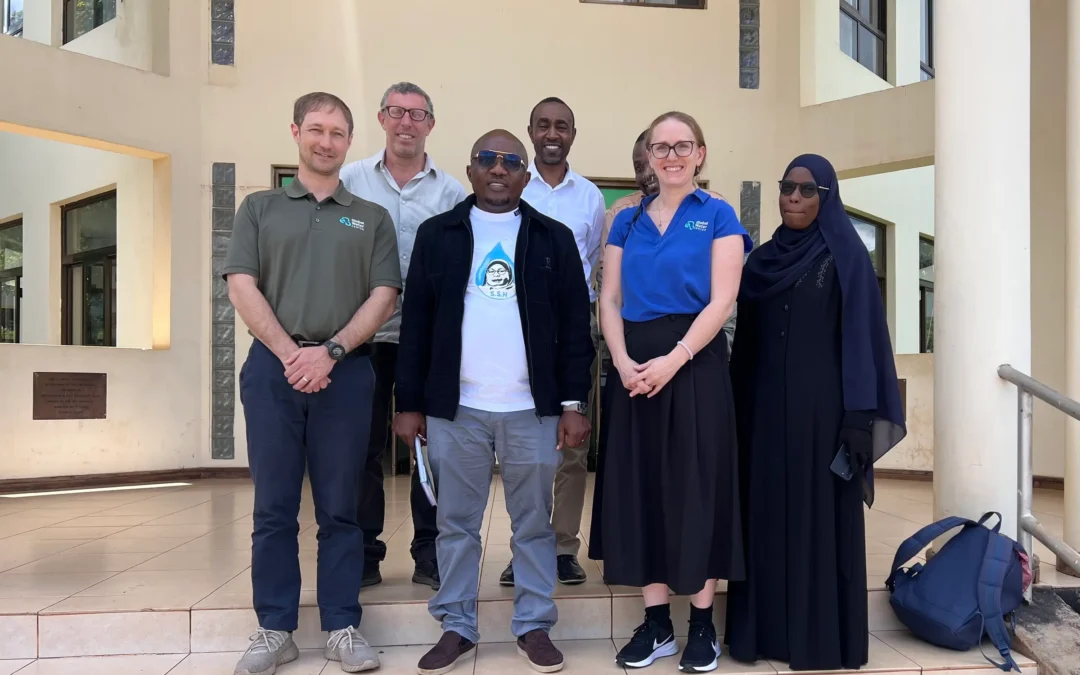
In Manyara, we met Amina, who everyone called Mama CBWSO (“see-be-oh-so”). CBWSOs are Community-Based Water Supply Organizations that run rural water systems across the country, and Amina was passionate about her work with them.
When we mentioned bringing water operator training to local technical and vocational schools, Amina’s eyes lit up. Within minutes, she had called a local vocational school and organized a visit for that very day.
As Eileen Jarnholt, GWC’s Director of Portfolio, remembers, “After receiving a warm welcome and touring the school, we started saying our goodbyes. Then Amina grabbed my hand, got really close, and said, ‘We really want to partner with you. We really want to bring your courses here to help our CBWSOs.’”
Amina’s passion for serving her community and her deep desire for more training were far more powerful than any formal request or official proposal. The team left their time in Manyara excited to keep moving forward with our plans to train water operators and support CBWSOs across the country.
Dodoma: Alignment at the national level
In Dodoma, the team met with leaders from RUWASA, the government organization that provides water to millions of rural Tanzanians.
The Director General of RUWASA shared his gratitude for GWC’s work, highlighting our focus on equipping Tanzanians to strengthen and manage their own water systems rather than doing the work for them.
RUWASA leadership expressed great interest in scaling GWC training through national systems. Together, we identified priority areas for the next three years of our partnership, mapping out an ambitious plan to equip hundreds of government water professionals with practical skills that will make a long-term impact.
Dar es Salaam: Partners asking for connection
In Dar es Salaam, the team met with national leaders and partners who help shape water programs across the country, including the Danish Embassy and the Water Institute Tanzania.
The conversations centered on making sure water professionals have the right training so systems keep working long after they are built. There was strong interest in deeper collaboration to reach more people in a lasting way.
We also learned that rural water leaders in Tanzania are becoming more focused on sustainability and reliability. This has increased their interest in training programs, working to standards, and incorporating operations and maintenance into their work.
What the journey revealed
The team left Tanzania deeply encouraged. We are not in this work alone. We are working alongside dedicated partners who share our vision of a day when everyone has access to safe water.
Together, we can (and will) solve the global water crisis.