
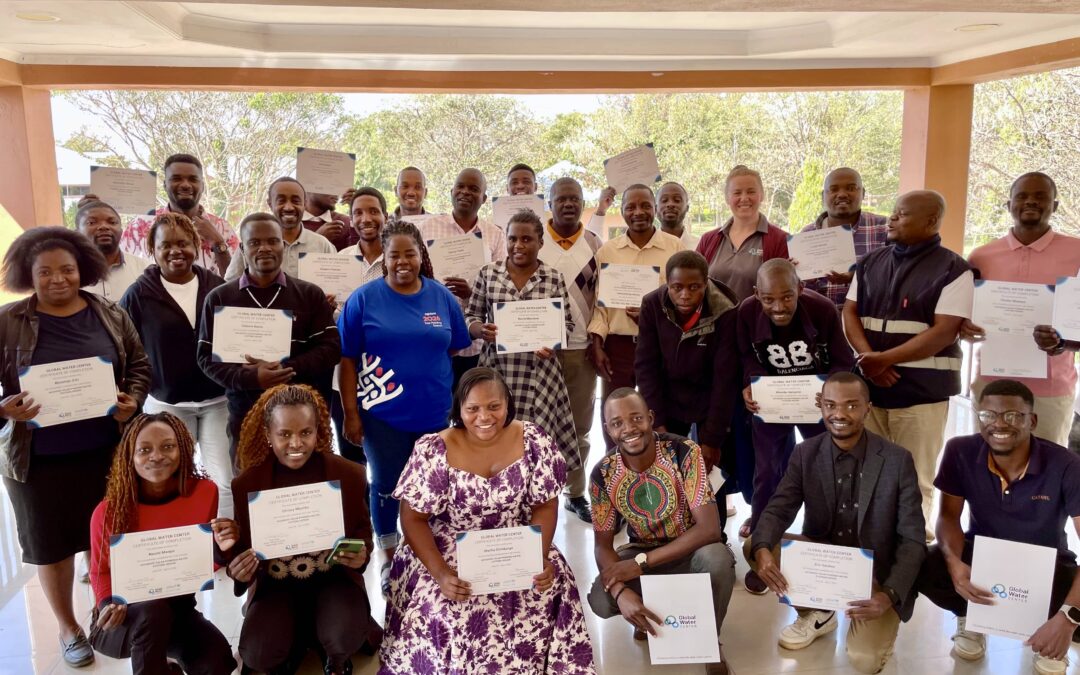
This summer, Global Water Center (GWC) launched the first training in a new partnership with UNICEF, delivering our Designing Solar Powered Water Systems course in Malawi.
Over eight days, GWC facilitators Kogi Chege and Tess Brodie worked alongside UNICEF and Malawi’s Department of Water Supply to train government engineers and technicians from districts across the country. Together, they explored the steps of designing sustainable solar powered water systems—from calculating water demand and selecting pumps to evaluating long-term sustainability.
The timing couldn’t be more important.
As Malawi expands its use of solar powered water systems, many existing rural hand pumps are being upgraded to provide more reliable water access. Because these systems often operate far from the electricity grid, careful design is essential to ensure they continue serving communities for years to come.
Before the training began, the GWC team visited existing water systems and met with UNICEF staff, government partners, and other sector leaders to better understand the country’s unique opportunities and challenges. Those conversations helped tailor the course to the local context, making the learning immediately relevant for participants.


Throughout the week, participants gained practical experience using design tools they can apply directly in their work. Rather than focusing only on technical concepts, the training emphasized real-world decision making that supports reliable, sustainable water services over the long term.
“This isn’t just about delivering training,” said Tess Brodie, GWC Technical Services Program Manager. “We’re putting practical design tools into the hands of local practitioners so they can make informed, sustainable decisions that will strengthen water services for communities across Malawi for years to come.”
This training marks an exciting milestone in GWC’s growing collaboration with UNICEF to strengthen local capacity and support resilient water services. By investing in the knowledge and skills of local professionals, we’re helping build systems that communities can rely on today—and into the future.
It was such a wonderful experience how i wish the happens to Uganda I will be the first to register for that practical attendance because I did that course but practical bit is somehow missing more so with advanced systems
It was such a wonderful experience. I enjoyed the training
@Chrissy- We are so glad to hear that! Thanks for your message.
@Denis- Thanks for your hard work in our course, and we hope to do it in person in Uganda in the future.