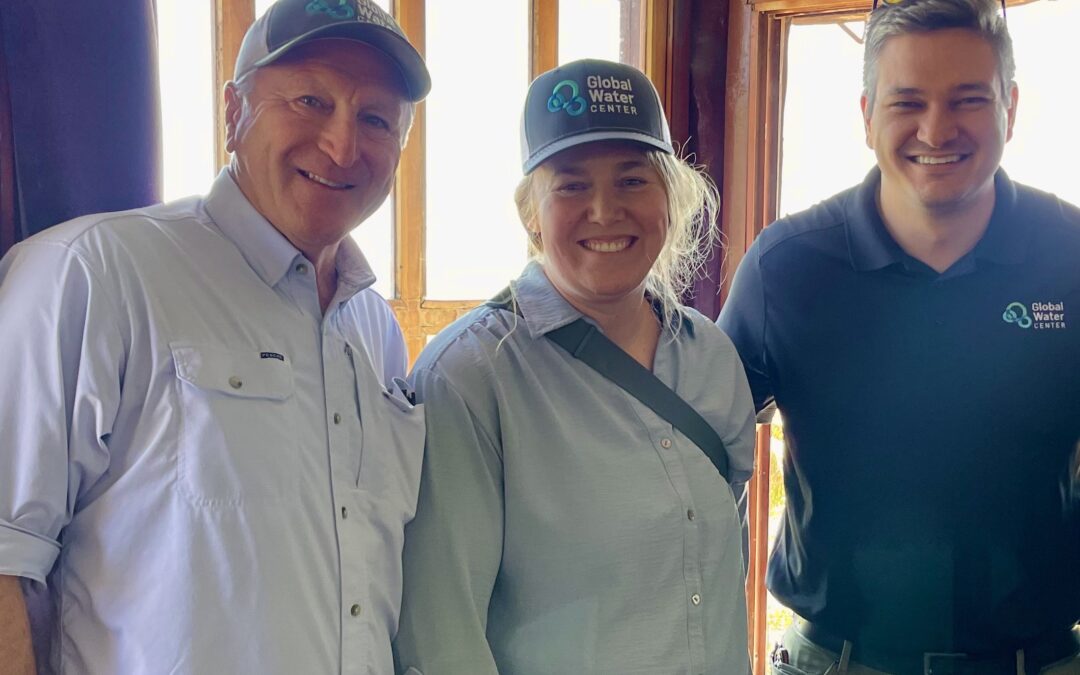
During a recent trip to El Salvador, teams from Global Water Center (GWC) and Catholic Relief Services (CRS) visited communities working every day to strengthen and sustain their own water systems.
In Capulín, a rural community outside San Salvador, the team met Angelin, who has spent most of his life keeping his community’s water system running.
He was just fifteen years old in 1986 when the first safe water system was built in his community. For families in Capulín, it was a major shift. Before the system, water access was uncertain, time-consuming, and a daily burden for households. Now, families can simply turn on a tap in their home.
But just a few years later, the project was left behind without a formal handover, and the community was left to figure out how to manage the system on its own.
Angelin stayed.
Today, more than 36 years later, he is the president of the community water board. He has helped guide the system through decades of repairs, expansions, and challenges. His goal has always been to keep water flowing for his neighbors.
The system now serves more than 1,500 families. Households pay small monthly fees, which are reinvested into pipes, tanks, and maintenance. Over time, those contributions have helped the community expand and sustain service across the area.
But by 2022, the system had reached its limit. Infrastructure was aging, and demand was growing. The community needed a new well and a storage tank but did not have the upfront capital to build them.
 They applied for a loan and were rejected. The system had decades of history, but it wasn’t presented in a way that a bank could understand or evaluate.
That is where technical assistance made a difference. With the help of CRS, the community strengthened its financial records, installed household meters to better understand water use, and organized its operational history into a clear case for investment.
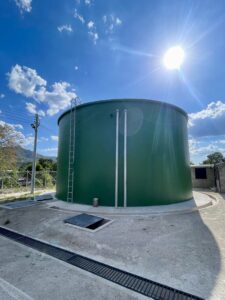
With that foundation, Capulín finally secured financing for expansion. A new well was drilled and a storage tank was built, improving service for thousands of people.
Now Angelin can keep doing what he’s done for the last three decades: Making sure his neighbors have access to safe water now and for generations to come.
A Growing Partnership in El Salvador
The visit to Capulín is part of a partnership that began in 2025 with GWC providing technical assistance to CRS’ Somos Río Lempa program — a multi-donor initiative addressing the watershed of El Salvador’s longest river and primary drinking water source. The program works at the national scale and will support hundreds of local water providers across the basin who deliver and manage water services for their communities.
GWC’s role centers on the technical foundations that determine whether water systems perform over the long term. That has included developing a multi-criteria cost-benefit framework to guide infrastructure investment decisions, providing engineering quality assurance on system designs, and supporting financial modeling for project investments — work intended to help CRS and its partners select, design, and sustain the right interventions across a complex portfolio.
Throughout the trip, teams from both organizations visited water systems across the Lempa basin, met with local water providers, and heard directly from the communities managing their own services. The visit was a chance to ground the partnership in field realities — to see how systems are actually performing, understand the constraints providers face, and sharpen where GWC’s technical assistance can have the greatest impact.
The El Salvador visit marked an important step in a growing partnership between GWC and CRS, built on a shared commitment to strengthening water systems alongside the communities that depend on them.
Stay Tuned: We’ll share more details from this meaningful trip and partnership in our next newsletter!