As GWC’s Benjamin Filskov made his way south from Addis Ababa to Borena, the terrain changed. Villages became more isolated. Water points more rare.
In some districts here, fewer than 10 percent of people have access to safe water within a mile of their home. Women and girls walk six to eight hours roundtrip to collect unsafe water from open ponds, putting their health at risk and placing a heavy burden on daily life.


In Borena, Benjamin visited solar powered water systems constructed by LM International and met with local water technicians responsible for keeping them operational. For years, LM International has drilled hundreds of boreholes across the region. More recently, they are transitioning to solar powered water systems to improve reliability and long-term service for rural communities.
Several of their staff completed GWC’s solar powered water systems courses as part of this shift toward more reliable water services. The training equipped them with the skills to design, operate, and maintain these systems, strengthening local capacity to keep water flowing.
Benjamin spoke with a local WASH team leader who shared how taking two of GWC’s courses directly impacted his ability to provide safe water to his community. Minbale Getachew, LM International’s Country Program Director, added that the training strengthened how their teams work together, improving communication between leadership and field technicians.
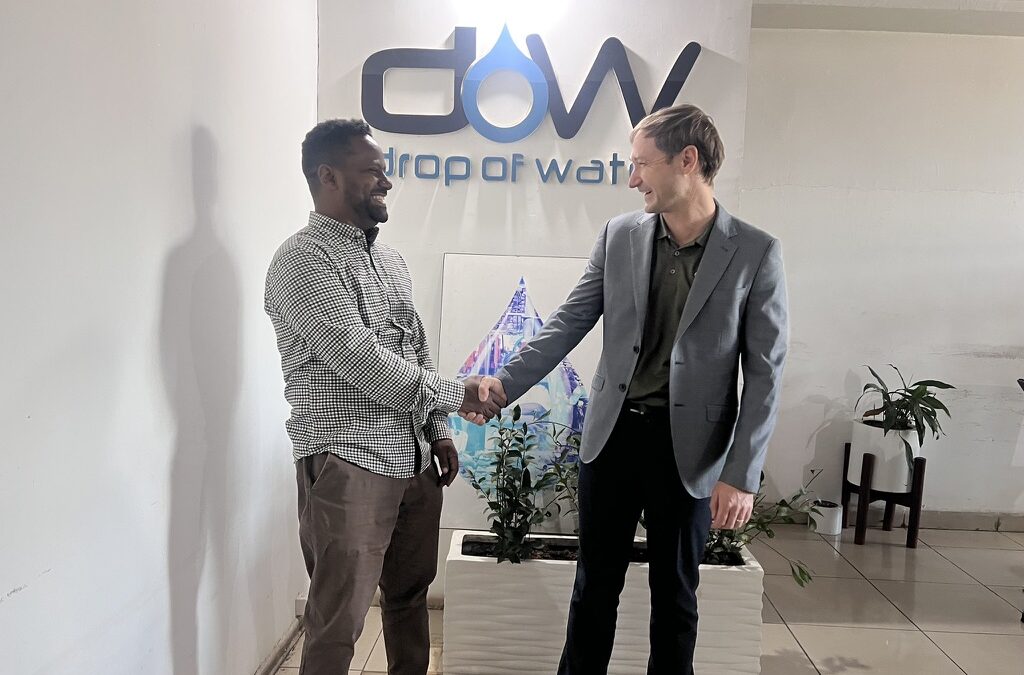
During this trip, Benjamin also met with leaders from Ethiopia’s Ministry of Water, Nile Basin Initiative, Plan International, and Drop of Water. Together, they explored how training, technical support, and institutional collaboration can strengthen Ethiopia’s water workforce and ensure systems continue serving communities over time.


Each meeting and field visit pointed to the same truth: Sustainable water access depends on people. Reaching communities across Ethiopia, including remote regions like Borena, requires strong institutions and skilled technicians. This is what determines whether water systems serve communities for generations or quickly fall into disrepair.
By strengthening institutions and equipping technicians, GWC builds the capacity needed to keep water flowing.
In places like Borena, that means safe water communities can depend on.
This is very serious, however, if possible I would request global water center to help this people & train them more skills on solar water & initiate some projects of solar water pumps in this area
Thats a good recommendation but the initial TAF assessment needs to be done.
Absolutely! That is an important initial step.
Thank you for your comment. We hope to move toward more solar pump training in the future.
Thanks for visiting Borena area. I know that area. I had been worked with Global communities. But I missed you.