What if providing safe drinking water could also reduce pollution—and help pay for itself?
That’s the idea behind GWC’s Carbon Aggregator Platform (CAP) in Uganda, an innovative approach to one of the biggest challenges in safe water access: keeping water systems running long after they’re installed.
Across Uganda, many families rely on boiling water over firewood or charcoal to make it safe to drink. While boiling protects against waterborne illnesses, the smoke from these fires creates other health risks, and burning these fuels contributes to greenhouse gas emissions.
Providing safely treated water can address both problems. But there’s a catch: water service providers often struggle to cover the ongoing costs of operations, maintenance, and repairs. Without reliable funding, even well-designed systems can fall into disrepair, leaving communities without dependable access to safe drinking water.
CAP offers a way to break this cycle. When families have safe drinking water, they don’t need to burn as much wood or charcoal to boil it. That means less smoke and pollution. CAP measures the greenhouse gas emissions avoided and turns those verified reductions into carbon credits that can be sold. The money earned helps water service providers maintain and repair their systems, keeping safe water flowing for years to come.
In October 2026, GWC team members TJ Askew and Chelsea Inglis traveled to Fort Portal, Uganda, to help put this model into action, working alongside local partners and communities to advance CAP Uganda.

Bringing CAP to Life in Uganda
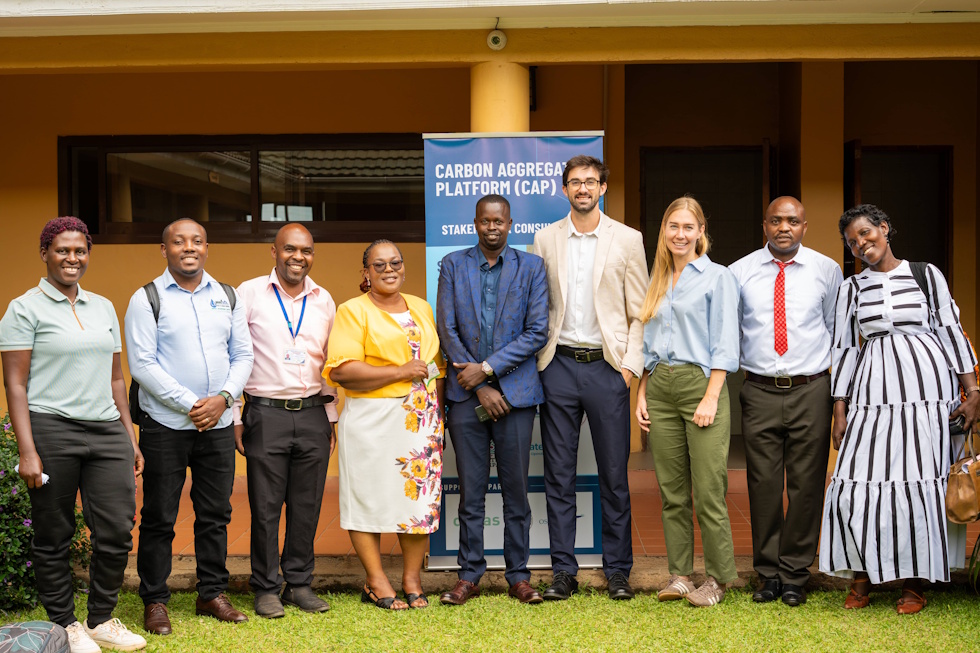
On October 7, TJ and Chelsea led a technical workshop with eight staff members from the Mid-Western Umbrella of Water and Sanitation (MWU), one of CAP Uganda’s implementing partners. Together, they assessed MWU’s data and monitoring systems against Gold Standard carbon certification requirements, identifying steps needed to prepare the organization to participate in CAP.
The following day, the focus shifted from technical systems to the people whose lives the program aims to improve.
Nearly 250 community members, local government officials, NGOs, educators, and health professionals gathered for the CAP Uganda Local Stakeholder Consultation, hosted by GWC’s Carbon for Safe Water (C4SW) program. The gathering brought together stakeholders from communities served by CAP’s four implementing partners: Irrisol Engineering, MWU, Water Compass, and WaterQuip Uganda.
The consultation was an important step toward Gold Standard certification, giving communities the opportunity to understand how CAP works, ask questions, raise concerns, and help shape the program’s future.
One of the most powerful moments came when a local doctor and health researcher spoke about the health consequences of boiling water over wood and charcoal fires. The doctor explained how smoke from these fires can harm families, even as boiling protects them from waterborne illnesses.
It was a powerful reminder of what CAP represents beyond carbon credits and financing: healthier homes, cleaner air, and reliable access to safe drinking water.

Building Momentum for Lasting Impact
The response from stakeholders was overwhelmingly positive. Participants expressed strong support for CAP and the opportunity to use carbon revenue to sustain safe water services in their communities. Many were particularly excited about the potential to expand access to safe water and contribute to the program through improved maintenance and data collection.
The consultation marked an important milestone toward Gold Standard certification for CAP Uganda. Next, GWC will use feedback from the consultation to help shape CAP Uganda and continue working with local water providers to prepare them to earn carbon credits.
While in Uganda, TJ also attended the MajiPreneurs Summit, connecting with water entrepreneurs and organizations exploring innovative financing, public-private partnerships, and opportunities to strengthen water services across the country.
Both events highlighted growing momentum toward a more sustainable approach to safe water access. Rather than focusing solely on building new infrastructure, the goal is to ensure communities have the resources to keep water systems running.
Through CAP, GWC and its partners are helping lead this shift by connecting healthier communities, a cleaner environment, and sustainable financing. The potential extends far beyond Uganda, offering a model that could transform how safe drinking water is funded and delivered around the world.
Great initiative with potential for Uganda and other Nile basin countried
Thank you!